Throughout the voting period for local government elections, hundreds of thousands of ballot packs are delivered to homes across Tasmania. As voters complete their ballot papers and return them to the Tasmanian Electoral Commission, attention turns to the results.
Who will be elected, and when will we know?
With separate elections for councillors, mayors and deputy mayors across Tasmania's 29 councils, counting votes is a large and complex operation. Every ballot paper must be carefully handled and accounted for as the count progresses, to determine who will represent Tasmania's local communities for the next four years.
As votes are returned
To prepare for counting, TEC election staff begin processing postal ballot packs as they're received throughout the voting period.
The outer Reply Paid envelopes used to return votes are opened and staff check that each contains a sealed ballot paper envelope. At this stage, they’ll confirm the attached declaration slip has been signed by the voter. If the declaration hasn't been signed, or has been removed, the enclosed ballot papers cannot be admitted into the count.
Once these checks are complete the voter is marked off the roll and the envelope is admitted to the count. The signed declaration slips are removed and stored securely, separately from the ballot envelopes. The ballot papers remain sealed inside their envelopes until voting closes, protecting the secrecy of each vote.
When voting closes
At 2 pm on the final day of the polling period, voting closes and no further ballot paper envelopes can be accepted.
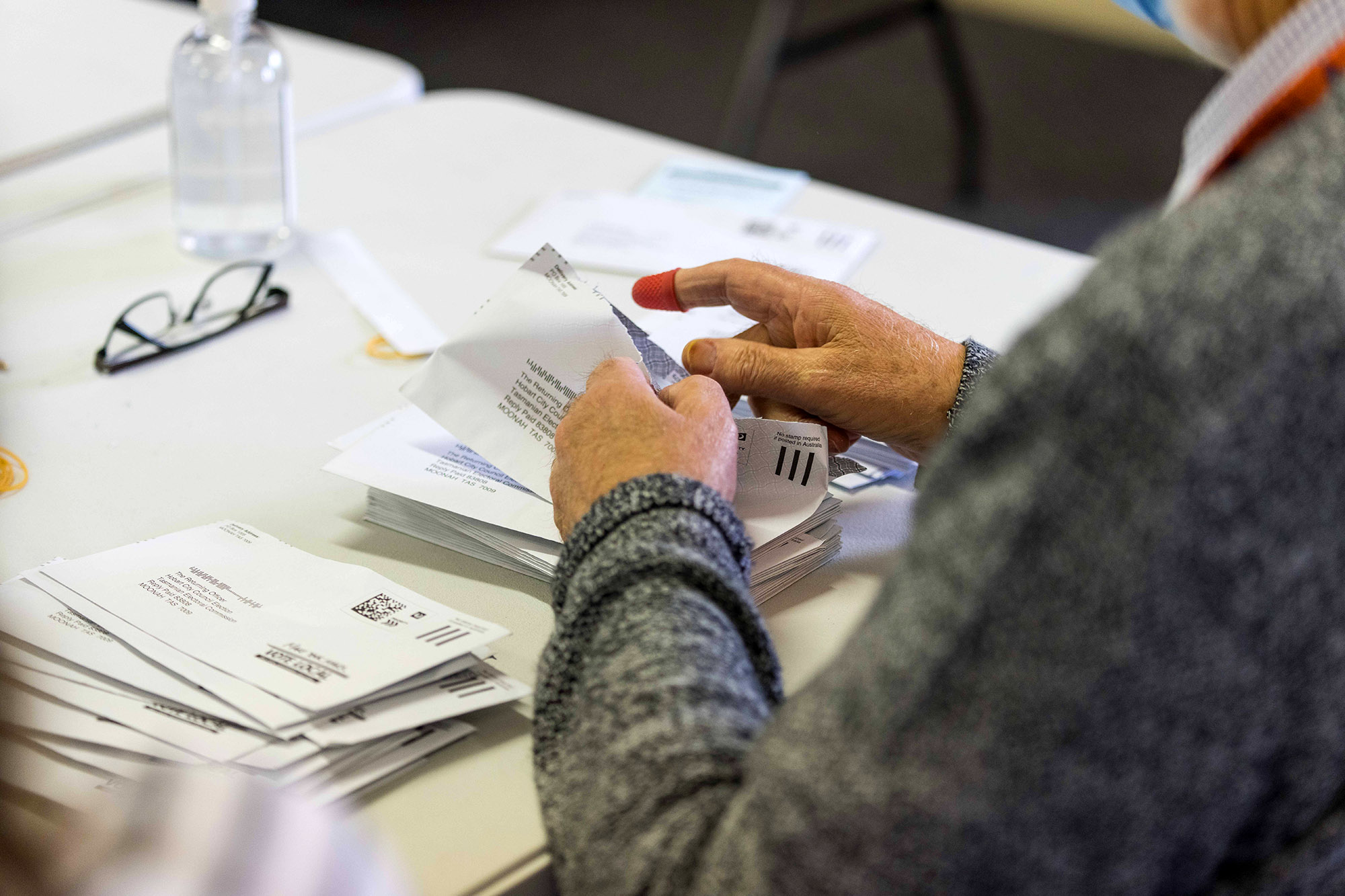
Returned ballot paper envelopes are taken to counting centres, where election staff open them and remove the ballot papers. These are then balanced and separated for the councillor, mayor and deputy mayor counts.
Throughout these preparations and the counting that follows, candidates may appoint representatives to observe this work. Known as scrutineers, these representatives can raise concerns about the handling or counting of ballot papers with election officials, but they cannot interrupt the process.

Counting mayor and deputy mayor votes
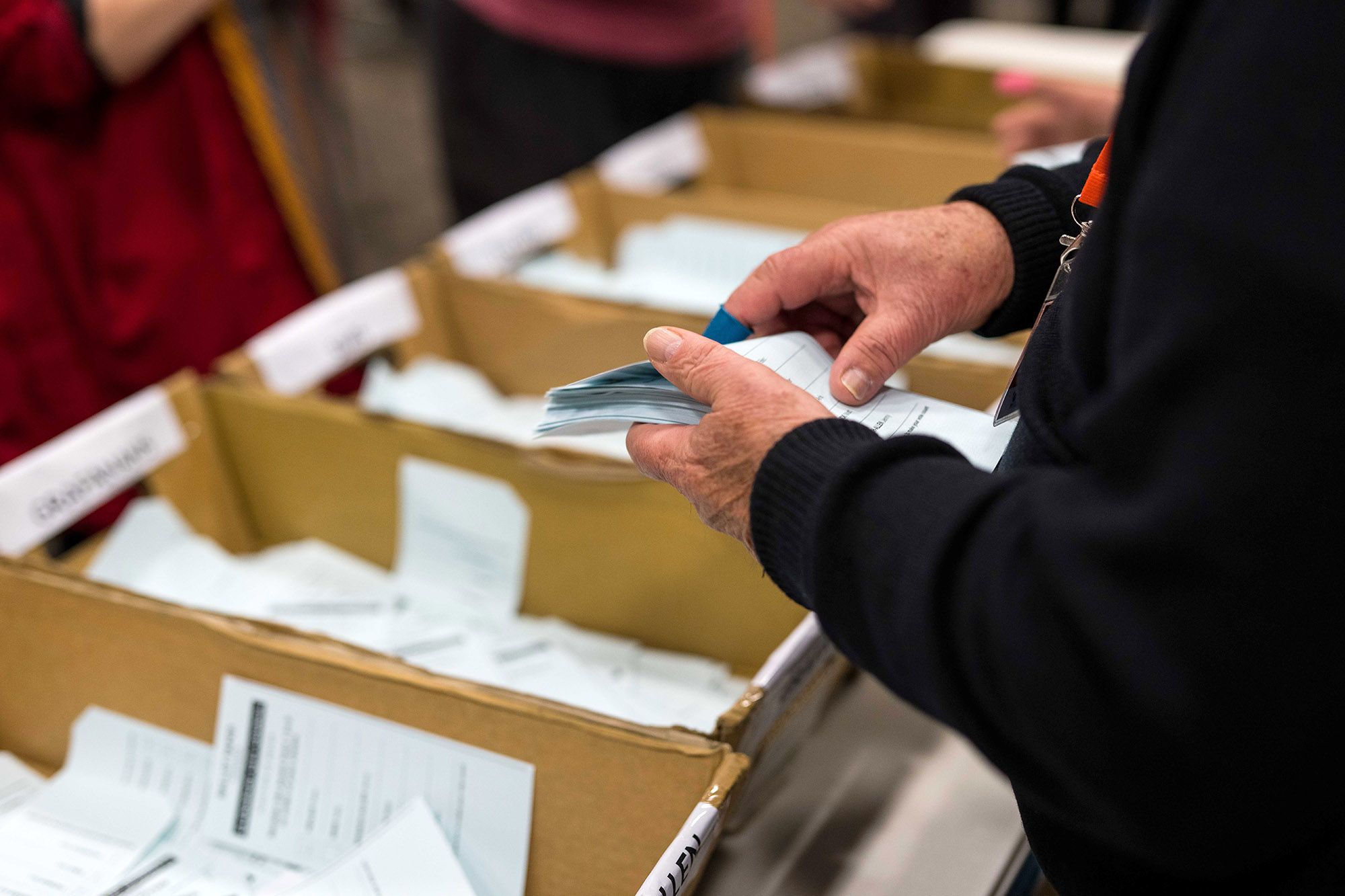
Counting begins with the sorting of ballot papers according to each voter's first-preference candidate.
As staff sort the papers, they also identify any that may be informal — meaning they may not meet the requirements to be included in the count. For example, a ballot paper may be informal if the voter hasn't numbered enough boxes or their preferences cannot be clearly understood.
To be elected mayor or deputy mayor, a candidate must receive an absolute majority, which is more than half of the votes in the count.
If no candidate receives an absolute majority of first-preference (1) votes, the candidate with the fewest votes is excluded. Their votes are then transferred to the remaining candidates according to the next preference (2) marked on each ballot paper.
If a ballot paper has no further preferences for candidates remaining in the election, it becomes an exhausted vote and is no longer counted towards the majority needed to be elected.
This process of distributing preferences continues until one candidate reaches an absolute majority. This successful candidate will also need to be elected as a councillor to be able to take up the position of mayor or deputy mayor.
Counting councillor votes
Councillor ballot papers are counted differently to mayor and deputy mayor ballots because there are multiple councillor positions to be filled. To determine the successful candidates, a counting system called Hare–Clark is used, where candidates are elected by reaching a set number of votes known as a quota. The quota is calculated using a formula that includes the total number of formal votes and the number of councillor positions to be filled.
When a candidate receives enough votes to reach the quota, they are elected. Any votes above the quota can then be transferred to other continuing candidates according to the next available preferences on those ballot papers. As with mayor and deputy mayor elections, preferences are also distributed when candidates with the lowest number of votes are excluded from the count.
This distribution continues until all councillor positions are filled. If one position remains and only one candidate is left in the count, that candidate is elected even if they have not reached the quota.
To carry out these calculations, election staff enter the preferences marked on each ballot paper into a computer system. Each ballot paper is entered twice, by different staff, to check the accuracy of the data. The system then applies the Hare–Clark counting rules, completing complex calculations in seconds that could take hours or days to perform by hand.

Publishing the results and declaring the outcomes
As votes are counted, progressive results are updated on the TEC website, allowing the public to follow each election as the results take shape.
Counting and checking continue until the returning officer (the official responsible for overseeing each election) can confirm the final result. With separate elections for councillors, mayor and deputy mayor across Tasmania's 29 councils, the number of ballot papers and candidates varies from one election to another. Some counts are also more complex than others, so final results become available at different times.
Once the results are confirmed, the returning officer declares who has been elected and issues a Certificate of Election, which is forwarded to the Electoral Commissioner, bringing the election to its formal conclusion.
Behind each result are thousands of individual votes, carefully received, processed and counted to determine who will represent local communities for the next four years.